French Oak Flooring Oak Saphir
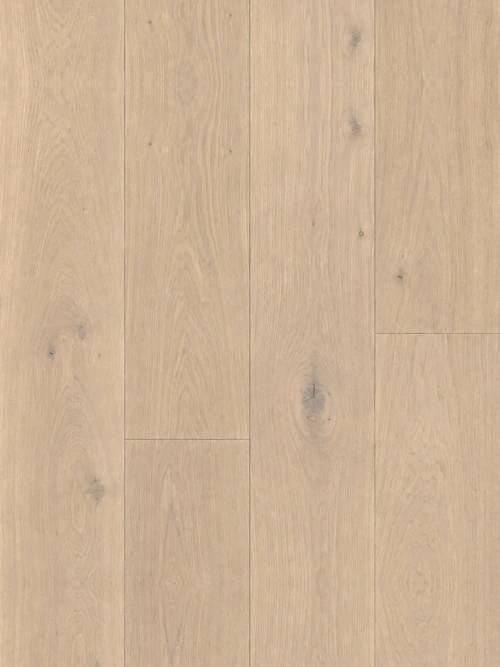
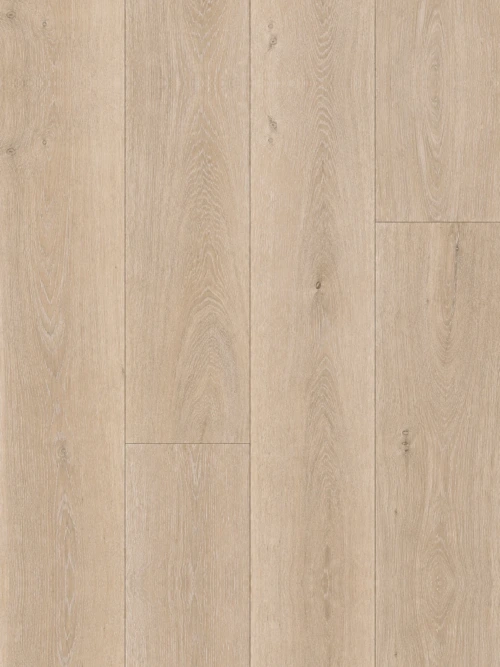
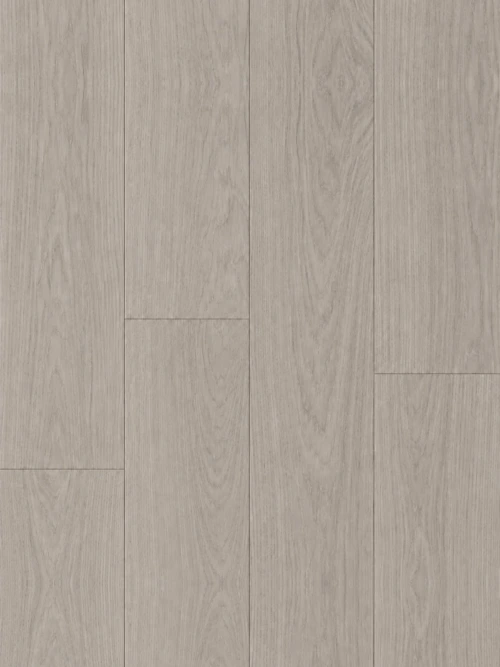
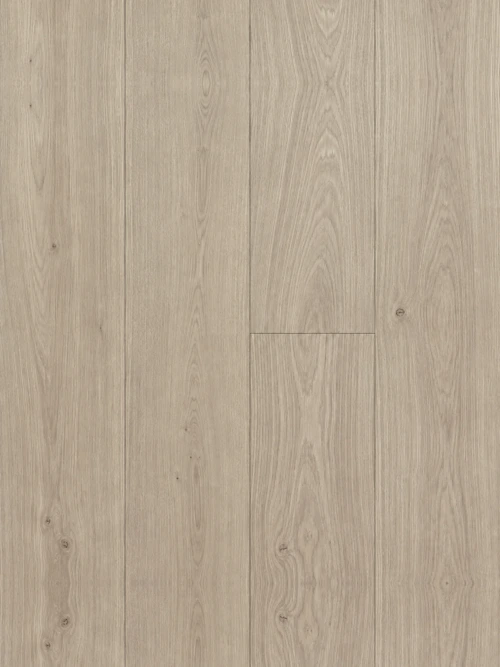
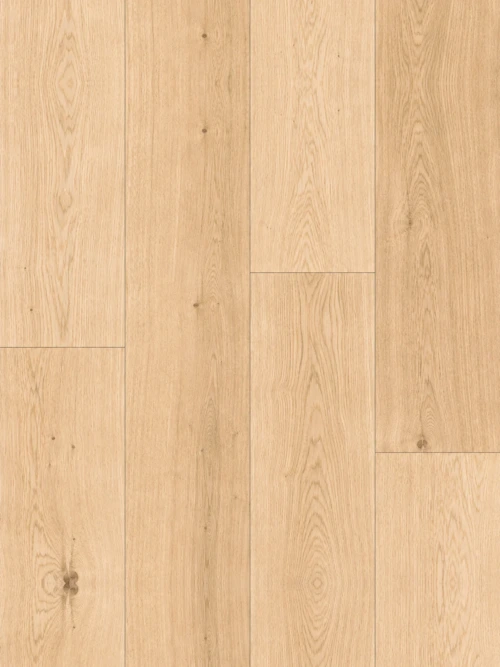
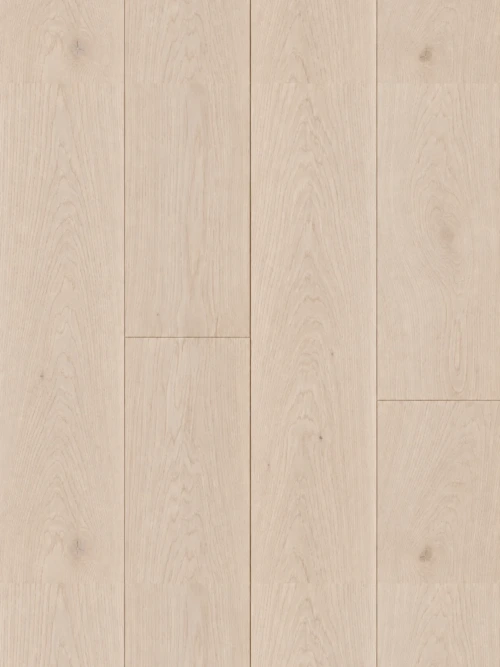
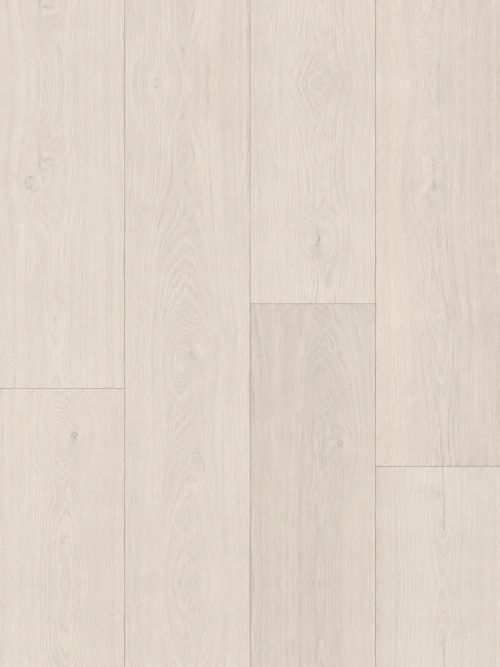
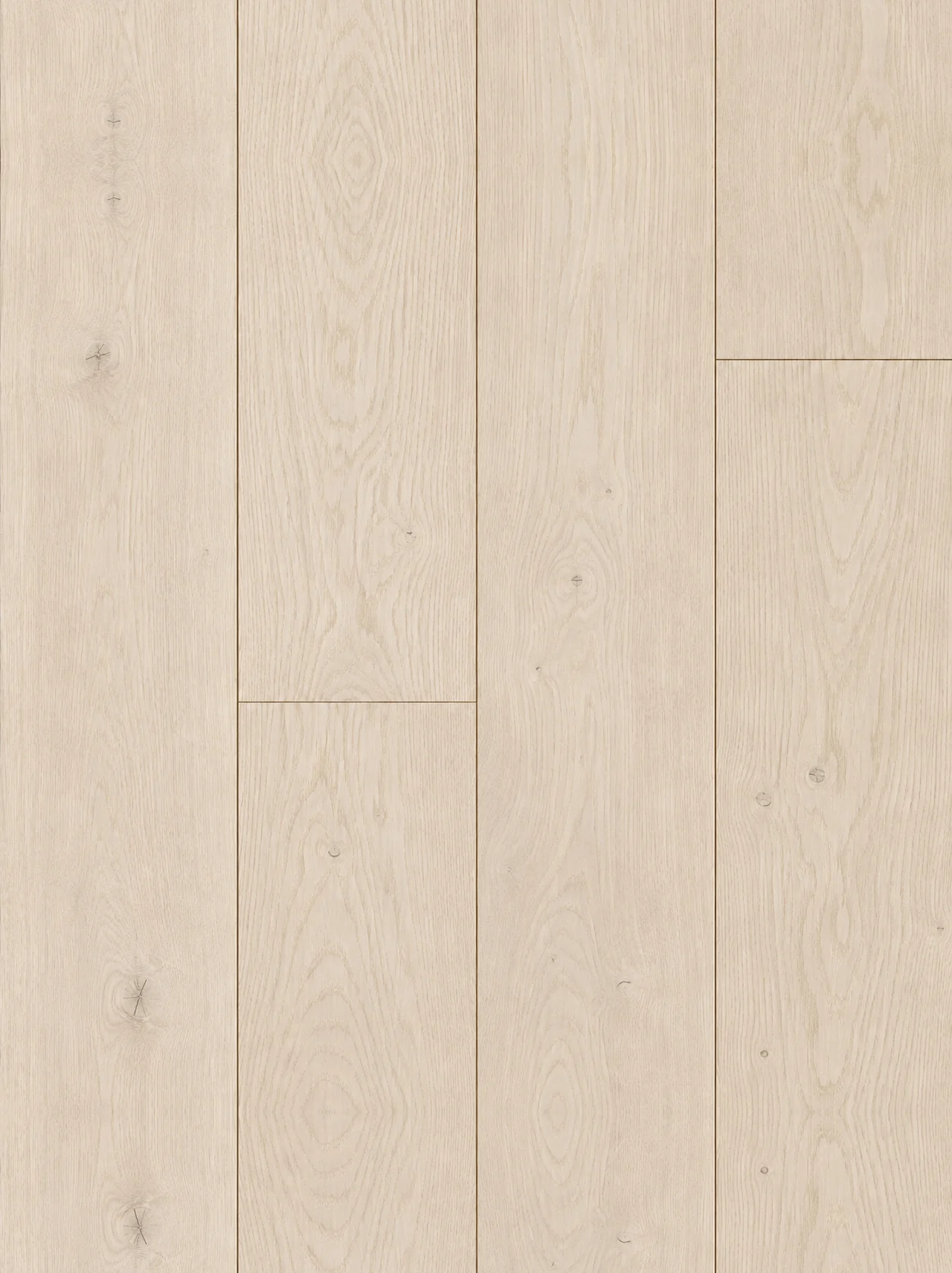
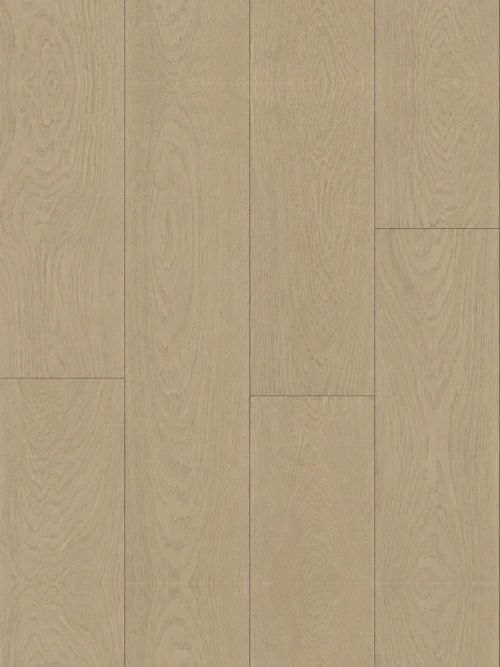
Saphir takes its name from the pale, cool fire of a white sapphire, and that is exactly the register the colour sits in: a clear white oak with a cool cast and no yellow at all in the base. In daylight it reads almost luminous; under warm evening light it settles into soft ivory rather than turning cream.
Light Rustic grade is what keeps a colour this pale unmistakably timber. Knots, mineral streaks and grain movement stay visible through the white, so the floor carries texture and depth rather than reading as a painted plane. Variation between boards is low, so the character sits inside each board rather than in jumps of tone across the room.
The surface is urethane with a matt lacquer effect — a cured film that sits above the timber, sheds household marks readily and asks for very little beyond sweeping and a damp mop. A 9/16″ engineered core carries a 4 mm wear layer, a genuine sanding reserve that allows the floor to be refinished in the ordinary way years from now.
Oak Saphir comes into its own in bright, pared-back interiors — white plaster walls, limestone and pale marble, linen and bleached oak joinery — and in coastal and waterfront residences where the intention is to keep the light moving through the room.
Full specification for French Oak Flooring Oak Saphir is set out below, and samples of French Oak Flooring Oak Saphir are dispatched from the VOGUE Parquet showroom for review before ordering.
Key Features:
– French oak, Light Rustic grade
– 7 1/4″ wide, 78″ random lengths
– 9/16″ engineered construction, 4 mm wear layer
– Urethane finish, matt lacquer effect
– Cool white tone with no yellow base
– Low board-to-board variation
Note: Cool whites shift noticeably with the colour temperature of a room. Screen colour is only ever a guide — request a physical sample and view it in the room it is intended for.
To judge French Oak Flooring Oak Saphir properly, request a physical sample and view it in the room it is intended for. Our team can send full specification documentation for French Oak Flooring Oak Saphir and advise on setting-out, subfloor preparation and installation. French Oak Flooring Oak Saphir is available to view by appointment at the VOGUE Parquet showroom. French Oak Flooring Oak Saphir forms part of the VOGUE Parquet luxury hardwood collection.
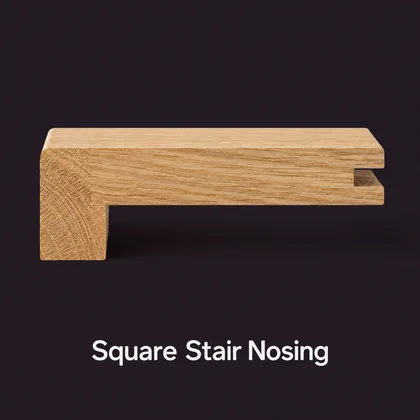

Matching trims are made in the same colour and finish as French Oak Flooring Oak Saphir: square stair nosing, bullnose stair nosing and reducer.In Their Words
The border layout was custom drawn to fit the room proportions instead of forcing a standard pattern. That attention to detail elevated the entire residence.
After reviewing several European oak collections, this was the only one that met both our design vision and technical requirements. The construction quality speaks for itself.
The sample box answered every question before installation. Seeing the colors under natural daylight made specifying the flooring simple and gave our clients complete confidence.
We needed extra-wide European oak planks with a custom finish that complemented our millwork. Everything arrived exactly as specified, and the craftsmanship was exceptional.
The private consultation saved us weeks of searching. Daisy understood the aesthetic immediately and recommended a custom European oak floor that became one of the home’s defining features.
The finish samples arrived in days, not weeks. Comparing them in the space made the decision obvious. The floor we selected looks exactly as we imagined.
Every specification was clearly explained, from the oil finish to the engineered construction. That level of product knowledge made specifying the flooring effortless.
We wanted European oak that felt natural instead of manufactured. The wire-brushed texture, thick wear layer, and matte finish gave us exactly that.
Six months of construction traffic over a protected floor and the reveal was flawless.
The floor absorbs the sound of the room in a way tile never could. My client noticed before I did.
Their samples come at full board width. Everyone else sends a chip and hopes.
The bespoke pattern took three drawings to settle and one attempt to make.
We specified them against a European supplier on price and lead time. They won on both.
My clients bought the house for the water view and talk about the floor.
The engineered core is thicker than anything else we priced. That is the part nobody sees and the part that matters.
A ninety-degree turn in a chevron is where suppliers get found out. This one did not get found out.
We had a colour disagreement with the client, and they sent four new samples in a week. No charge, no comment.
The board holds a matte sheen at a raking angle. Most factory finishes cannot.
The tone sits between the limestone and the walnut without borrowing from either.
Delivery arrived palletised, wrapped and labelled by room. My site manager still mentions it.
The parquet panel in the entry is a piece of joinery, not a floor covering.
The quarter-sawn figure catches the afternoon light without ever becoming a pattern.
I have used them on eleven projects. The only variable has ever been my own drawings.
The chevron point is cut at the mill, not on site. You can see the difference from across the room.
A designer’s floor and a builder’s floor are different products. This one satisfied both of us.
Wide plank in a small room is usually a mistake. At this length, it is the opposite.
The herringbone border stops half an inch clear of the wall on every side. Not one of those inches is wrong.
We reused the pattern from the original 1924 floor. They matched the board width to the eighth of an inch.
The colour we approved on the sample is the colour that arrived. All eighteen hundred square feet of it.
I have specified oak for twenty years and had not seen this grade outside Europe. The mill drawings alone told me who I was dealing with.
Sixty-two units, one continuous grain direction, delivered across four phases without a single shade variance between them.
They drew the pattern to the room rather than the room to the pattern. The Chevron meets the threshold on a full point at both ends.
We specified the Herringbone for the entry gallery and the room found a sense of ceremony it never had.
The rift and quartered boards read as one continuous plane across four thousand square feet. Not a single seam asks for attention.
We asked for a wider board than they normally mill. They milled it.
The floor was the first decision on the project and it never had to be revisited.
Nothing arrived damaged. Across three deliveries and four hundred boxes, nothing.
A tower floor plate with eight unit types and one flooring package. It held.
An oiled floor asks something of the owner. They explained exactly what, in writing, before we committed.
The chevron and the wide plank come from the same log run, so the two rooms belong to each other.
The board length distribution was exactly what the cut sheet promised. I counted.
They corrected an error in my own specification before ordering. It would have cost me eleven thousand dollars.
A quiet floor makes an expensive room. This is a very quiet floor.
Twelve years in hospitality and this is the first floor I have specified twice in one year.
The custom stain matched a chair rail we could not replace. Two samples.
Grade, cut, width, finish, core. They were the only supplier who could speak to all five.
The Herringbone is laid at forty-five to the entry axis and the whole apartment feels wider.
We ran the plank across an indoor-outdoor threshold with a flush track. They detailed the whole junction.
The border layout was custom drawn to fit the room proportions instead of forcing a standard pattern. That attention to detail elevated the entire residence.
After reviewing several European oak collections, this was the only one that met both our design vision and technical requirements. The construction quality speaks for itself.
The sample box answered every question before installation. Seeing the colors under natural daylight made specifying the flooring simple and gave our clients complete confidence.
We needed extra-wide European oak planks with a custom finish that complemented our millwork. Everything arrived exactly as specified, and the craftsmanship was exceptional.
The private consultation saved us weeks of searching. Daisy understood the aesthetic immediately and recommended a custom European oak floor that became one of the home’s defining features.
The finish samples arrived in days, not weeks. Comparing them in the space made the decision obvious. The floor we selected looks exactly as we imagined.
Every specification was clearly explained, from the oil finish to the engineered construction. That level of product knowledge made specifying the flooring effortless.
We wanted European oak that felt natural instead of manufactured. The wire-brushed texture, thick wear layer, and matte finish gave us exactly that.
Six months of construction traffic over a protected floor and the reveal was flawless.
The floor absorbs the sound of the room in a way tile never could. My client noticed before I did.
Their samples come at full board width. Everyone else sends a chip and hopes.
The bespoke pattern took three drawings to settle and one attempt to make.
We specified them against a European supplier on price and lead time. They won on both.
My clients bought the house for the water view and talk about the floor.
The engineered core is thicker than anything else we priced. That is the part nobody sees and the part that matters.
A ninety-degree turn in a chevron is where suppliers get found out. This one did not get found out.
We had a colour disagreement with the client, and they sent four new samples in a week. No charge, no comment.
The board holds a matte sheen at a raking angle. Most factory finishes cannot.
The tone sits between the limestone and the walnut without borrowing from either.
Delivery arrived palletised, wrapped and labelled by room. My site manager still mentions it.
The parquet panel in the entry is a piece of joinery, not a floor covering.
The quarter-sawn figure catches the afternoon light without ever becoming a pattern.
I have used them on eleven projects. The only variable has ever been my own drawings.
The chevron point is cut at the mill, not on site. You can see the difference from across the room.
A designer’s floor and a builder’s floor are different products. This one satisfied both of us.
Wide plank in a small room is usually a mistake. At this length, it is the opposite.
The herringbone border stops half an inch clear of the wall on every side. Not one of those inches is wrong.
We reused the pattern from the original 1924 floor. They matched the board width to the eighth of an inch.
The colour we approved on the sample is the colour that arrived. All eighteen hundred square feet of it.
I have specified oak for twenty years and had not seen this grade outside Europe. The mill drawings alone told me who I was dealing with.
Sixty-two units, one continuous grain direction, delivered across four phases without a single shade variance between them.
They drew the pattern to the room rather than the room to the pattern. The Chevron meets the threshold on a full point at both ends.
We specified the Herringbone for the entry gallery and the room found a sense of ceremony it never had.
The rift and quartered boards read as one continuous plane across four thousand square feet. Not a single seam asks for attention.
We asked for a wider board than they normally mill. They milled it.
The floor was the first decision on the project and it never had to be revisited.
Nothing arrived damaged. Across three deliveries and four hundred boxes, nothing.
A tower floor plate with eight unit types and one flooring package. It held.
An oiled floor asks something of the owner. They explained exactly what, in writing, before we committed.
The chevron and the wide plank come from the same log run, so the two rooms belong to each other.
The board length distribution was exactly what the cut sheet promised. I counted.
They corrected an error in my own specification before ordering. It would have cost me eleven thousand dollars.
A quiet floor makes an expensive room. This is a very quiet floor.
Twelve years in hospitality and this is the first floor I have specified twice in one year.
The custom stain matched a chair rail we could not replace. Two samples.
Grade, cut, width, finish, core. They were the only supplier who could speak to all five.
The Herringbone is laid at forty-five to the entry axis and the whole apartment feels wider.
We ran the plank across an indoor-outdoor threshold with a flush track. They detailed the whole junction.
The border layout was custom drawn to fit the room proportions instead of forcing a standard pattern. That attention to detail elevated the entire residence.
After reviewing several European oak collections, this was the only one that met both our design vision and technical requirements. The construction quality speaks for itself.
The sample box answered every question before installation. Seeing the colors under natural daylight made specifying the flooring simple and gave our clients complete confidence.
We needed extra-wide European oak planks with a custom finish that complemented our millwork. Everything arrived exactly as specified, and the craftsmanship was exceptional.
The private consultation saved us weeks of searching. Daisy understood the aesthetic immediately and recommended a custom European oak floor that became one of the home’s defining features.
The finish samples arrived in days, not weeks. Comparing them in the space made the decision obvious. The floor we selected looks exactly as we imagined.
Every specification was clearly explained, from the oil finish to the engineered construction. That level of product knowledge made specifying the flooring effortless.
We wanted European oak that felt natural instead of manufactured. The wire-brushed texture, thick wear layer, and matte finish gave us exactly that.
Six months of construction traffic over a protected floor and the reveal was flawless.
The floor absorbs the sound of the room in a way tile never could. My client noticed before I did.
Their samples come at full board width. Everyone else sends a chip and hopes.
The bespoke pattern took three drawings to settle and one attempt to make.
We specified them against a European supplier on price and lead time. They won on both.
My clients bought the house for the water view and talk about the floor.
The engineered core is thicker than anything else we priced. That is the part nobody sees and the part that matters.
A ninety-degree turn in a chevron is where suppliers get found out. This one did not get found out.
We had a colour disagreement with the client, and they sent four new samples in a week. No charge, no comment.
The board holds a matte sheen at a raking angle. Most factory finishes cannot.
The tone sits between the limestone and the walnut without borrowing from either.
Delivery arrived palletised, wrapped and labelled by room. My site manager still mentions it.
The parquet panel in the entry is a piece of joinery, not a floor covering.
The quarter-sawn figure catches the afternoon light without ever becoming a pattern.
I have used them on eleven projects. The only variable has ever been my own drawings.
The chevron point is cut at the mill, not on site. You can see the difference from across the room.
A designer’s floor and a builder’s floor are different products. This one satisfied both of us.
Wide plank in a small room is usually a mistake. At this length, it is the opposite.
The herringbone border stops half an inch clear of the wall on every side. Not one of those inches is wrong.
We reused the pattern from the original 1924 floor. They matched the board width to the eighth of an inch.
The colour we approved on the sample is the colour that arrived. All eighteen hundred square feet of it.
I have specified oak for twenty years and had not seen this grade outside Europe. The mill drawings alone told me who I was dealing with.
Sixty-two units, one continuous grain direction, delivered across four phases without a single shade variance between them.
They drew the pattern to the room rather than the room to the pattern. The Chevron meets the threshold on a full point at both ends.
We specified the Herringbone for the entry gallery and the room found a sense of ceremony it never had.
The rift and quartered boards read as one continuous plane across four thousand square feet. Not a single seam asks for attention.
We asked for a wider board than they normally mill. They milled it.
The floor was the first decision on the project and it never had to be revisited.
Nothing arrived damaged. Across three deliveries and four hundred boxes, nothing.
A tower floor plate with eight unit types and one flooring package. It held.
An oiled floor asks something of the owner. They explained exactly what, in writing, before we committed.
The chevron and the wide plank come from the same log run, so the two rooms belong to each other.
The board length distribution was exactly what the cut sheet promised. I counted.
They corrected an error in my own specification before ordering. It would have cost me eleven thousand dollars.
A quiet floor makes an expensive room. This is a very quiet floor.
Twelve years in hospitality and this is the first floor I have specified twice in one year.
The custom stain matched a chair rail we could not replace. Two samples.
Grade, cut, width, finish, core. They were the only supplier who could speak to all five.
The Herringbone is laid at forty-five to the entry axis and the whole apartment feels wider.
We ran the plank across an indoor-outdoor threshold with a flush track. They detailed the whole junction.