French Oak Chevron Flooring
French oak chevron flooring is the most exacting floor we make. Every piece is mitred at both ends so that the boards meet point to point in a continuous V, and the rows read as unbroken lines running the length of the room. There is nowhere for a bad cut to hide, which is why the pattern has always been a test of both the timber and the mill.
VOGUE Parquet® supplies it in French oak, engineered and prefinished, in select and light rustic grades and in the full colour range. This page covers the angle, the size, the setting out and the ordering. It sits under our French oak flooring collection and alongside the wider chevron flooring pages.
The French Oak Chevron Collection

The Mitre and the Line
Why the Mitre Changes Everything
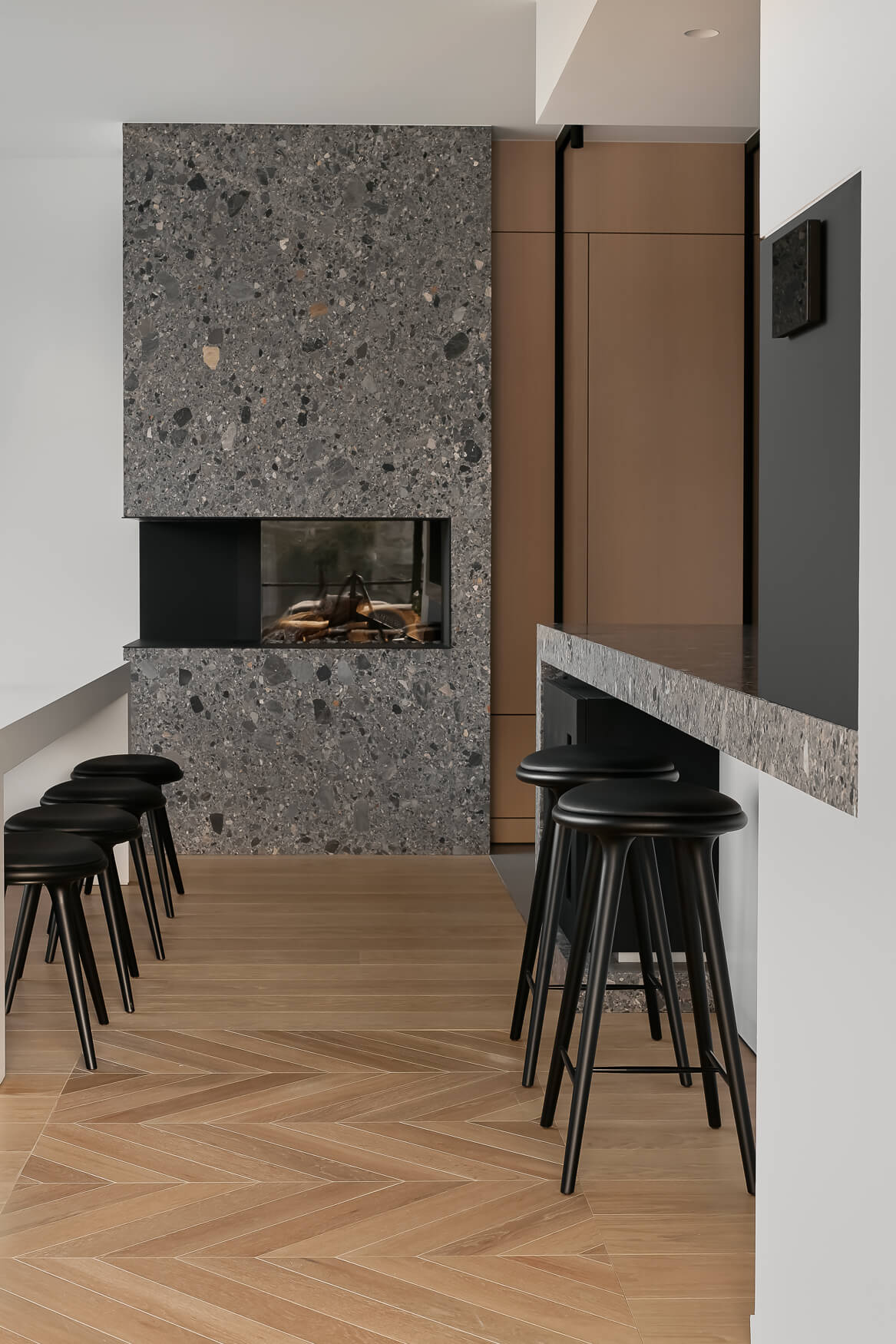
In a herringbone floor the pieces are cut square, so a joint that is a fraction out disappears into the step of the pattern. In chevron there is no step. Two mitred ends meet along a single line that runs the full width of the floor, and any error in the angle or the length opens as a visible gap that repeats down every row.
That tolerance drives everything else. The timber has to be stable enough not to shift after cutting, the mitre has to be machined rather than trimmed on site, and the pieces have to be matched in pairs so that left and right hands close correctly. It is a manufacturing problem more than an installation one, and it is the reason French oak chevron flooring costs more than the same oak in plank or herringbone.
It is also the reason the pattern looks the way it does. Because the joint is continuous, the grain appears to flow across it from one board into the next, and the floor reads as a series of long arrows rather than as a collection of pieces. Our note on chevron and herringbone compares the two directly.
French oak chevron flooring is cut at either forty-five or sixty degrees, and the choice changes the character of the floor completely. A forty-five degree cut produces a wide, open V with a shallow point, which reads as relaxed and contemporary and suits rooms that are broad rather than long.
A sixty degree cut produces a narrow, steep V with a sharp point. It is the more classical of the two, it is the angle used in most of the historic French floors people have in mind when they ask for the pattern, and it drives the eye harder down the length of a room.
Neither is more correct. What matters is the proportion of the room and what the floor is being asked to do in it. Our article on chevron flooring angles goes into the geometry, including how the angle interacts with the width of the piece to set the height of each row.
French Oak Chevron Flooring Sizes
We supply French oak chevron flooring in two widths as standard, three and a half inches and five and a half inches. The narrower size produces a fine, close pattern with many rows and a strong sense of movement. It suits halls, smaller rooms and interiors where the floor is meant to be read as a texture.
The wider size produces fewer, larger rows and a calmer floor with more of each board visible. It needs floor area to be appreciated, and it is the size we specify most often for open-plan living space and for large galleries.
Both share the thickness of our plank, with a four millimetre solid French oak wear layer over an engineered core, so a chevron floor and a plank floor can meet at a threshold with no step. Custom widths are cut to order where a room or an existing floor requires them.
French oak chevron flooring is directional in a way that herringbone is not, and the direction has to be decided before anything is ordered. The point of the V should run down the main axis of the room, which usually means down the length of a hall or straight towards the principal view or the fireplace, so that the pattern carries the eye where the architecture already wants it to go.
Running the pattern across a room rather than along it is possible and occasionally right, in a room that is much longer than it is wide and needs to feel less like a corridor. It should be a deliberate decision rather than a consequence of where the installer started.
The centreline of the pattern is the other critical decision. The seam where the two hands meet should sit on a line that matters architecturally, the middle of a room or the centre of a doorway, because it is the strongest line in the floor and it will be read as intentional whether or not it was.
TWO MITRED ENDS MEETING ON A SINGLE UNBROKEN LINE


Forty-five or sixty degrees, three and a half or five and a half inches, cut to order.
Grades of French Oak Chevron Flooring
Select is the grade most often specified for French oak chevron flooring, and there is a reason beyond taste. The continuous joint draws the eye along the row, and a large knot sitting on that line interrupts the run in a way it would not in a plank floor. Even colour lets the geometry carry the room.
Light rustic in chevron is a strong choice rather than a soft one. The knots and mineral streaks land within a pattern that is already assertive, and the result is a floor with a great deal of character that needs an interior confident enough to hold it. It works in converted buildings, in rooms with stone and heavy timber, and in houses where the floor is meant to look as though it has always been there.
The grade does not affect the construction or the wear layer. Both grades are cut from the same timber to the same tolerance, and the difference is entirely one of appearance.
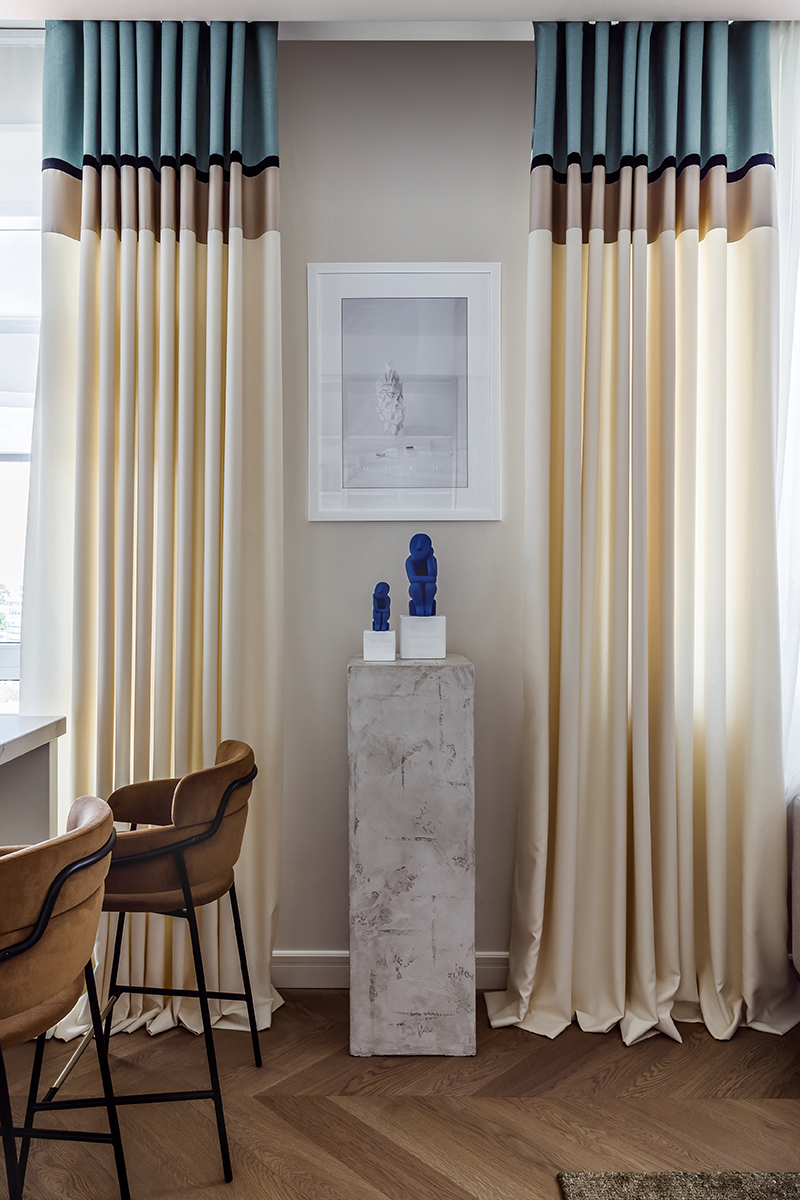
Colour reads differently on French oak chevron flooring than on any other pattern. Because the rows are continuous, the floor holds long uninterrupted bands of tone rather than the alternating light and dark of a herringbone, so the colour appears more even and the pattern more graphic.
That evenness makes darker colours easier to use than they are in other patterns. A deep chestnut or near-black French oak chevron flooring keeps its geometry legible where the same colour in plank can flatten into a single dark plane. Pale colours work equally well and give the pattern a light, drawn quality, almost like a line drawing on the floor.
All of our colours are developed with reactive stains that respond to the tannin in the oak rather than sitting on top of it, so the depth comes from the timber. The full range is shown in the European oak flooring collection.


FRENCH OAK CHEVRON
Select and light rustic
THE MOST EXACTING FLOOR WE MAKE
Borders, Perimeters and Adjoining Floors
Like any angled pattern, French oak chevron flooring meets the wall on a diagonal and needs something to close it. A plain border of one or two boards around the perimeter is the usual answer and the one that reads cleanest, because it gives the mitred ends a straight line to run into.
Where French oak chevron flooring meets a plank floor at a doorway, the transition should fall under the door leaf so the two patterns are never seen together in one view. Where it meets stone, a shadow gap or a metal trim does the work, and the setting out should be adjusted so a full row rather than a sliver lands at the junction.
For rooms where the perimeter itself is meant to be part of the design, a border in a contrasting colour or a run of custom parquet flooring panels can frame the chevron field. That is made to order to a drawing.
French oak chevron flooring needs the largest waste allowance of any pattern we supply, around fifteen percent over the measured area. The mitred ends mean every perimeter cut sacrifices more material than a square cut would, and the left and right hands have to be balanced across the floor so neither runs out first.
That allowance is not negotiable in the way people sometimes hope. French oak chevron flooring is made to order, so a shortfall means a second mill run and a second stain batch, with a wait of weeks and a colour that may not sit beside the first delivery.
Lead times run from eight to twelve weeks depending on colour and finish. Installation takes longer than plank or herringbone, because each row has to be checked against the centreline as the floor advances and there is no forgiveness later.
Where the Cost Actually Sits
Clients are often surprised that French oak chevron flooring costs more than the same oak in a herringbone, given that both are patterns made from short pieces. The difference is almost entirely in the cutting. A mitred end wastes more of each board than a square end, and the two hands have to be produced and matched in balanced quantities, so the yield from a given volume of timber is lower.
Installation carries the second part of the difference. A square-cut pattern can be adjusted slightly as it goes; a mitred one cannot, so the work is slower and demands a fitter who has laid the pattern before. On a large floor that difference in labour is often larger than the difference in material.
What does not change is the value of what is underneath. The wear layer, the core, the finish and the guarantee are the same as on our plank, so a chevron floor carries the same reserve for refinishing and the same working life. The premium buys the pattern, not a different quality of floor.
French oak chevron flooring has to be fully bonded to the subfloor. The pattern runs in two directions at once, so a floating installation would pull the joints apart at exactly the point where the pattern is most visible. Full adhesion also makes the floor quieter and firmer underfoot.
Flatness matters more than for plank. A hollow under a mitred end shows as a lipped joint on a line that runs the width of the room, so the subfloor tolerance is tighter and the levelling has to be complete and cured before delivery.
Moisture content should be measured and recorded rather than estimated, and the material should be delivered into a building that is closed, heated and running at the humidity it will run at in use. Our engineered construction is compatible with radiant heat and thin enough to sit over an acoustic membrane where a building specification calls for one.
Rooms That Suit French Oak Chevron Flooring
Entrance halls are the classic case. A hall is seen in movement, it is usually narrow, and the directional pull of French oak chevron flooring turns a functional space into an arrival. It is the single room where the pattern most reliably justifies its cost.
Long open living floors are the second. Modern apartments with glass on two sides and few internal walls can feel undefined, and a chevron floor gives the plane a direction and an order without introducing colour or ornament. Slender towers such as 111 West 57th Street are the type of building where those long, uninterrupted floor plates occur.
Formal dining rooms, libraries and galleries take the pattern well for the same reason: they are rooms with an axis. Bedrooms and bathrooms usually do not, because the pattern needs a run of floor to establish itself. Our article on French oak chevron parquet looks further at the character of the material itself.
Request Chevron Samples
Chevron is specified from the point, not from a photograph. The angle, the grain running across the mitre and the way the finish holds the light only resolve when the piece is in front of you. We send them cut from current production and recorded with grade, wear layer and finish, so the floor can be specified from the material itself. Open the Bottega collection, choose the colours you want to see in chevron, and they are sent anywhere in the United States.