Solid Hardwood Flooring for Enduring Luxury Interiors
Solid hardwood flooring is the most enduring expression of a wood floor — each plank milled from a single, solid piece of timber rather than layered or bonded. At VOGUE Parquet®, we specify solid oak and other fine hardwoods for residences intended to be lived in for generations, where the floor is not a surface to be replaced but an architectural material that deepens in character over decades. Because it can be sanded and refinished many times across its life, a solid hardwood floor is among the rare interior elements that are renewed rather than removed.
The definition matters because the market has blurred it. A solid board is one piece of timber through its entire thickness, conventionally three quarters of an inch, machined with a tongue on one edge and a groove on the other. There is no core, no wear layer and no glue line anywhere in it. What you walk on at the start is the same material you would reach if you sanded it to within a whisker of the tongue, and that single fact is the origin of every argument in favour of solid hardwood flooring.
It is also the origin of every limitation. Because the board is one piece, it responds to moisture across its full width with nothing underneath to restrain it, and it has to be fastened down into something that will hold it. Those two constraints decide where it belongs and where it does not, and an honest specification says so rather than treating the material as universally superior.
SOLID HARDWOOD COLLECTIONS


Solid Hardwood Flooring for Distinctive Residential Architecture
The Enduring Nature of Solid Wood
A solid hardwood floor is worked from timber roughly three-quarters of an inch thick, allowing it to be sanded and refinished four to six times over a lifespan that routinely reaches thirty to one hundred years and beyond. That capacity to be restored — to shift tone, refresh a finish, or erase decades of wear — is what sets solid wood apart from every engineered or manufactured alternative. It is a material chosen not for a season, but for the life of a home.
Here is the case, and it is a strong one. A three-quarter inch board carries roughly a quarter of an inch of usable timber above the tongue. That allows six to ten full sandings depending on how aggressively each is taken, which across a century of ordinary domestic life means a floor that is refinished by each generation rather than replaced by any of them. No engineered board reaches that, and the best of them manage three or four.
Put in ownership terms, a solid hardwood flooring installation is not a finish you are buying, it is a fabric of the building. Floors of this kind are routinely still in service in houses built in the eighteen hundreds, having been sanded flat, re-stained to suit four or five different tastes, and handed on. That is the argument, and it is why the material has never gone away despite everything that has been engineered to replace it.
Solid Hardwood Flooring for Refined Homes
Because each board of solid hardwood is milled from a single piece of natural timber, it responds to the moisture in the air around it, expanding a little in humid conditions and contracting when the air is dry. Managed correctly, this movement is imperceptible; left unconsidered, it is what leads to cupping, gapping, or crowning. The difference is expertise. It begins with the material itself — harder species such as European and American white oak resist daily wear, while quarter-sawn and rift-sawn boards move markedly less than plain-sawn timber and hold their line for decades. It continues with disciplined preparation: milling to the correct moisture content, acclimating every plank on site before installation, confirming a sound and dry subfloor, and maintaining a stable interior climate — generally 30 to 50 percent relative humidity, the range the National Wood Flooring Association specifies for wood floors. VOGUE Parquet® guides clients, architects, and designers through each of these decisions — species, cut, grade, plank width, finish, and installation method — so that solid hardwood is specified where, and how, it will genuinely last.
The assembly is different from anything else we supply. A solid floor is nailed or cleated down, driven at an angle through the tongue so the fixing disappears under the next board, into a timber subfloor that can hold it. It is not floated and it is not bonded. That means it needs joists, or a plywood deck over joists, and it means the fixing schedule — how far apart the cleats sit, how close to each end — is part of the specification rather than a decision for the day.
Which is why solid hardwood flooring and concrete do not go together directly. A slab holds moisture and offers nothing to nail into, so laying solid over one requires a plywood sub-deck or a sleeper system built on top of the concrete first. That adds real height, real cost and real programme, and in a great many buildings it removes the option altogether. Anyone quoting solid over a slab without describing that sub-structure has not thought the job through.
Solid hardwood establishes the foundation of a well-considered interior
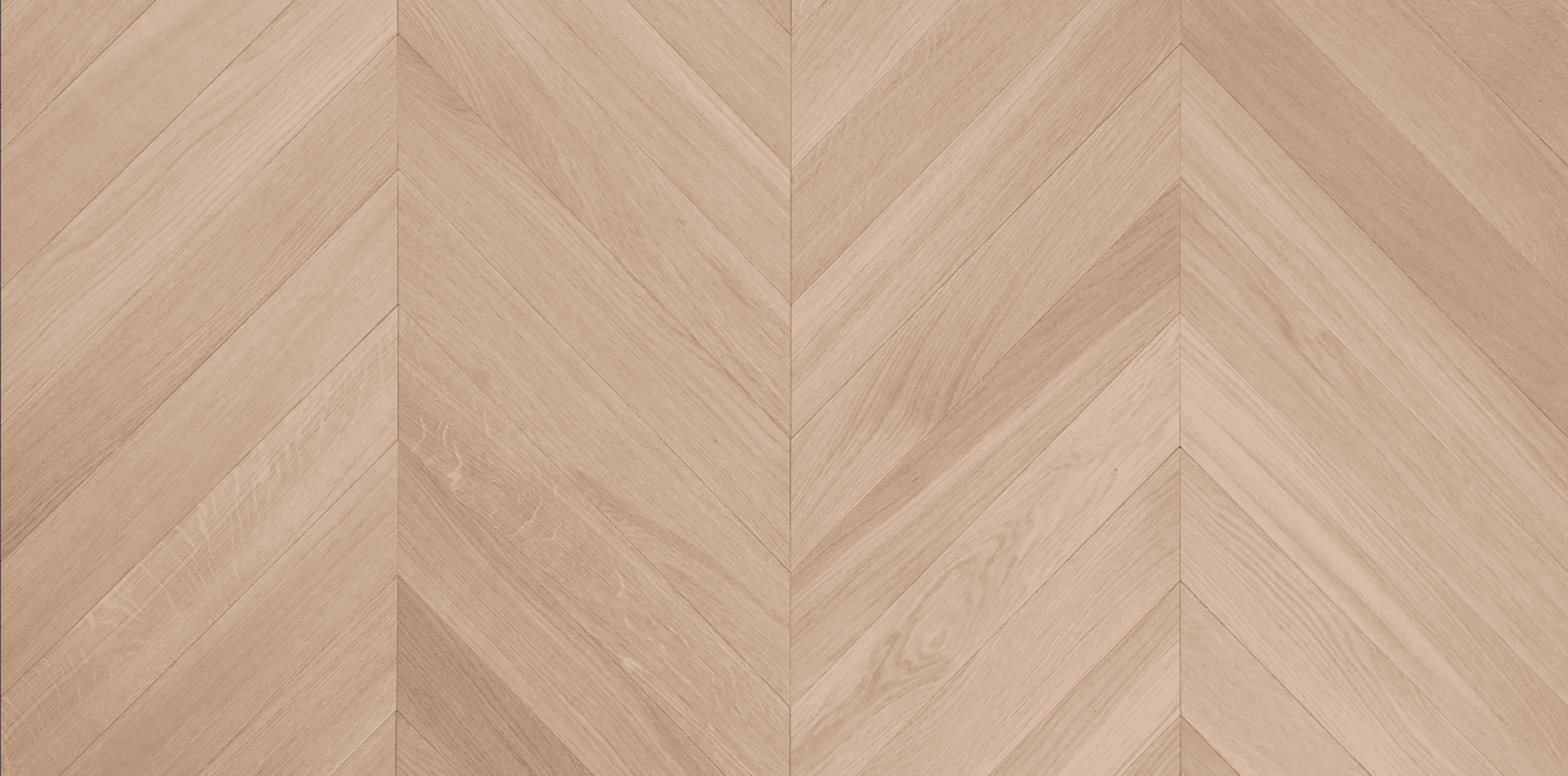
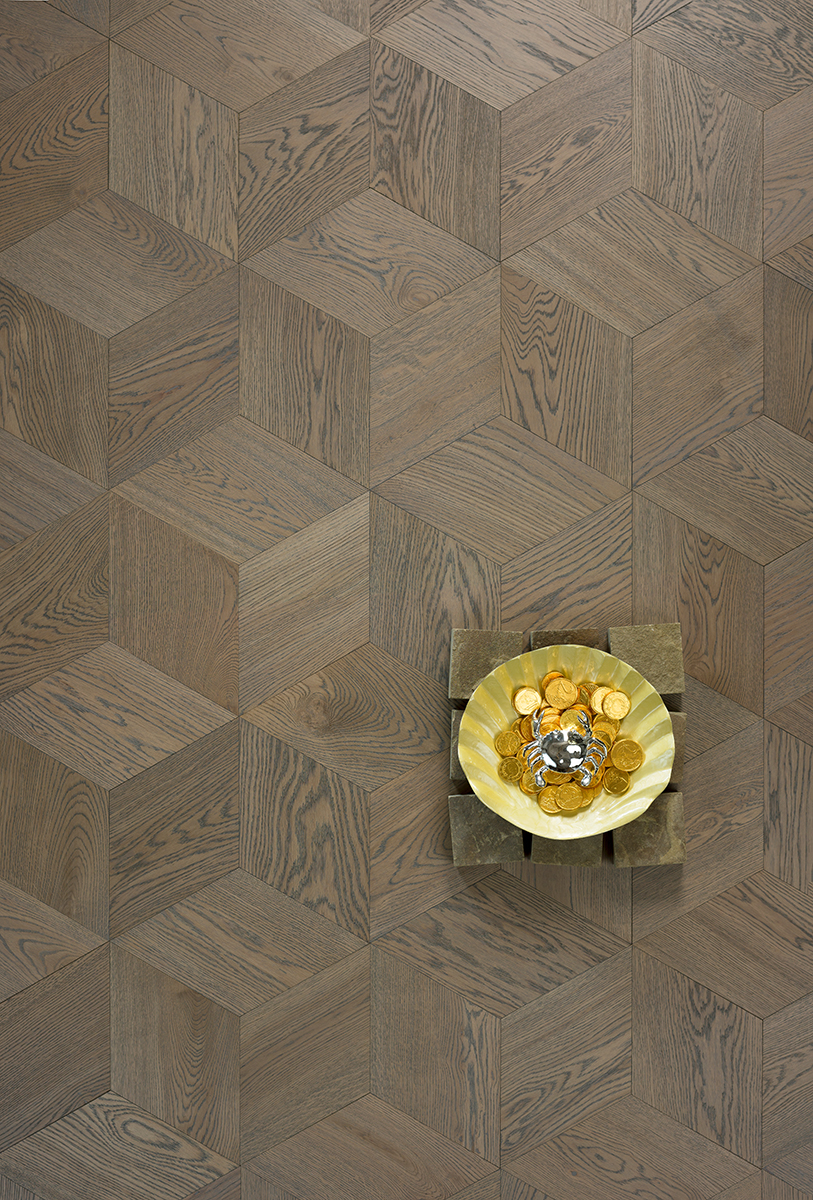
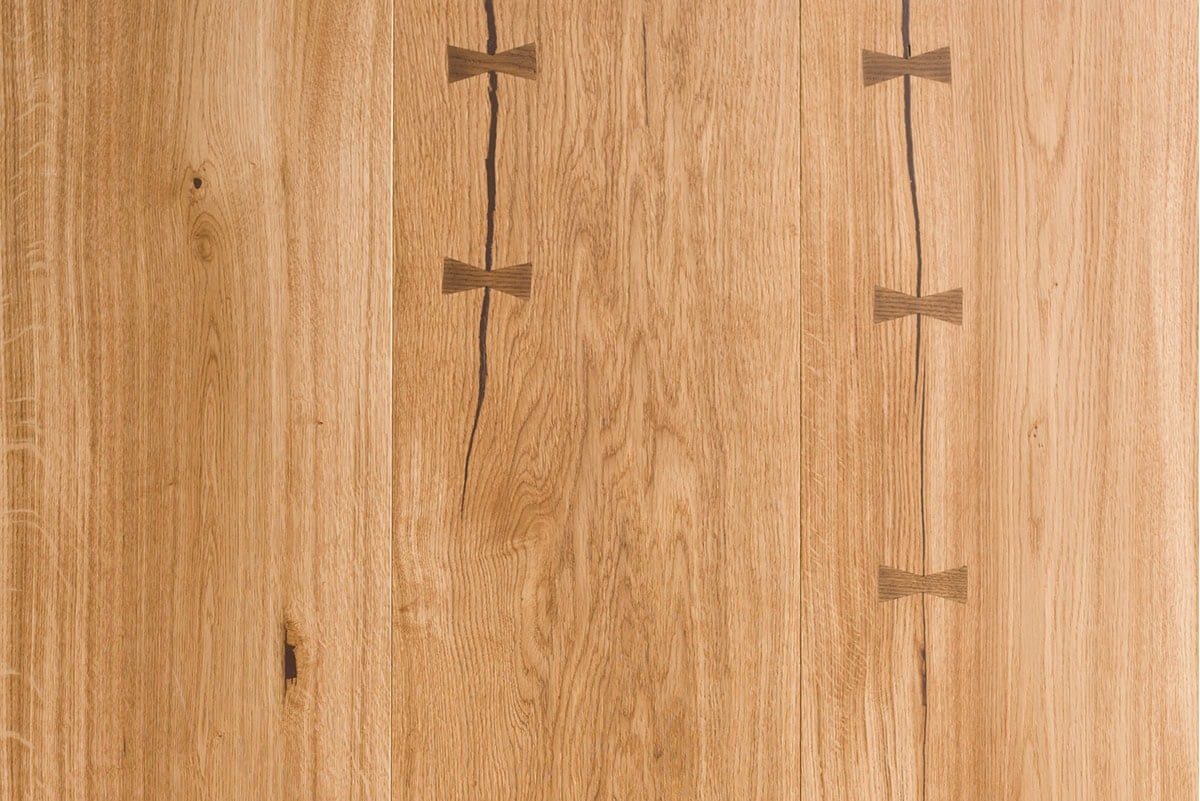
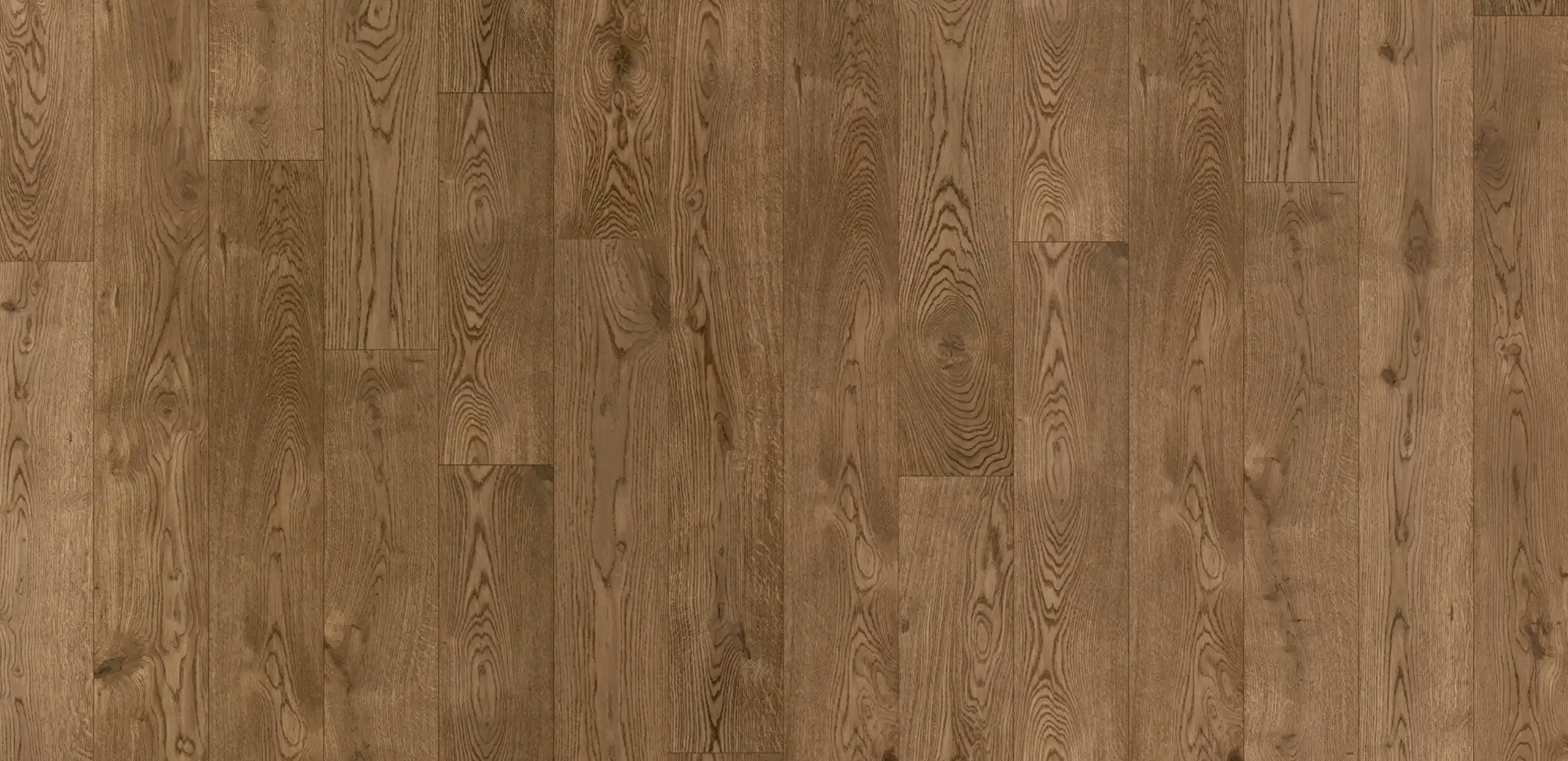
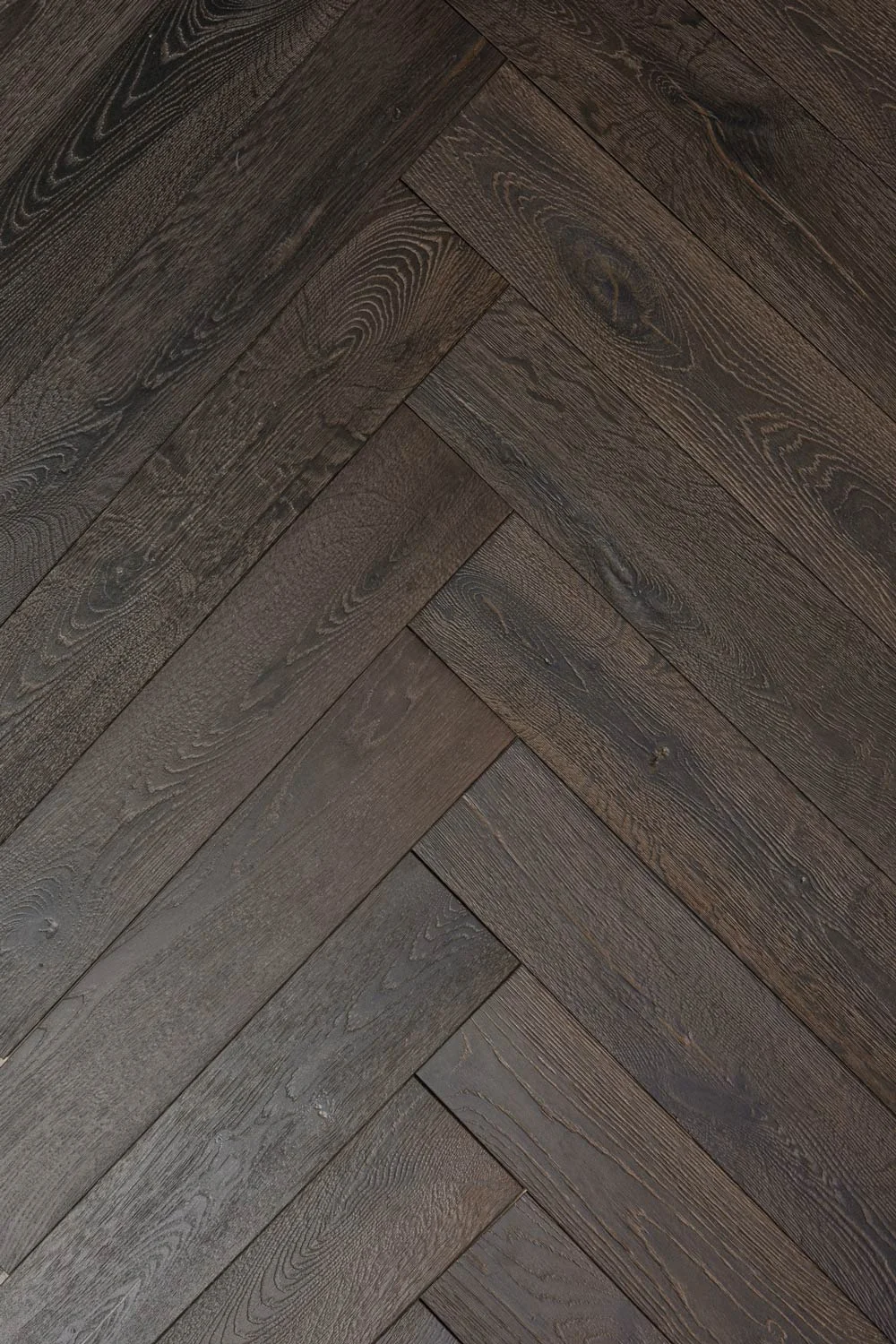
The most enduring interiors are defined by restraint and material integrity. A solid oak floor — its grain, its cut, and its finish chosen with intention — grounds a room and lets the architecture speak. We favour natural oil finishes and considered grades, from clean Select boards to more characterful timber marked by knots and mineral streaks, so the floor reads as quiet, tactile, and genuinely permanent.
Every board of solid hardwood flooring we supply is milled from a single piece of European oak, graded by hand, and matched for moisture content to the site it is going into.
Solid Hardwood Flooring Designed for Architectural Living
Solid hardwood rewards the rooms where a home is genuinely lived — living spaces, bedrooms, dining rooms, studies, and formal interiors. With the right species, cut, and installation method, it can be specified with confidence throughout a residence, whether nailed or glued over a suitable subfloor. Our role is to weigh every variable — subfloor construction, acclimation, plank width, grade, and fastening method — and calibrate each to the architecture, so the floor performs as beautifully as it reads. For the occasional application where site conditions call for it, we also craft engineered hardwood flooring in the same European oak, allowing the ideal construction to be specified for every space without compromise. It is this discipline that separates a floor which merely looks the part from one that performs, and continues to perform, for a lifetime.
There is an aesthetic argument for solid that almost nobody makes, and it is the one designers notice first in a finished room. A solid floor is traditionally laid raw and then sanded, coloured and sealed in place. The finish therefore runs across the joints as a single continuous film, and the boards read as one plane of timber rather than as a collection of individual pieces laid side by side.
A factory-finished board cannot do that. Each piece is sealed separately before it arrives, so however tightly it is laid there is a visible line at every joint, and most carry a small chamfer or micro-bevel at the edge to disguise the tolerance. On a wide, open, well-lit floor that rhythm of edges is perfectly attractive — but it is a different effect. If a client wants an unbroken surface with no edge detail whatsoever, solid hardwood flooring finished on site is the only way to achieve it.
The trade is disruption. Site finishing means sanding dust, solvent smell and a week or more of an unusable room, which is why it suits an empty property or a full renovation and rarely suits an occupied apartment.


SOLID OAK FLOORING
By VOGUE Parquet®
Where craftsmanship meets architectural vision, VOGUE Parquet® shapes solid hardwood into floors of lasting distinction
Why Solid Hardwood Flooring Remains a Timeless Choice
Solid hardwood endures because it can be renewed. Where most surfaces are eventually torn out, a solid wood floor is sanded back and refinished — its life measured in generations rather than years. That permanence, combined with the depth and warmth of real timber, is why solid hardwood remains the reference standard for heritage homes and the most considered new architecture alike. It is, quite literally, a floor that can be passed down.
Making the material behave well is a question of cut and of width, and both are within the specifier’s control. Quarter-sawn and rift-sawn boards, cut so the growth rings run close to perpendicular to the face, move roughly half as much across their width as plain-sawn boards do. Choosing the cut is the single most effective thing anyone can do to make a one-piece floor stable.
Width is the other lever. At two and a quarter, three and a quarter or four inches, oak in one piece is well within itself. At five it is at the sensible limit. Beyond that the seasonal movement becomes difficult to control in a real house, which is why genuinely wide floors are built differently. There is no shame in the limit; there is only trouble in ignoring it.
Solid Hardwood Flooring
VOGUE Parquet® delivers solid hardwood flooring to homeowners, architects, and interior designers across the United States — guiding every project from species and cut selection through acclimation, installation, and long-term care. Explore our European oak flooring, wide plank, and herringbone collections, or request samples to experience the material in your own space.
Solid hardwood guides: White Oak Hardwood Flooring, Wood Flooring Species Compared, Hardwood Flooring Grades, Bespoke Hardwood Flooring, Hardwood Flooring for Pet Owners, Matte vs Gloss Finishes, Hardwood & Property Value, Tips for Buying Wood Flooring.
Solid hardwood flooring by location: Miami, New York, Los Angeles. Further reading covers engineered against solid, the main types of floor, what makes a floor last and quarter-sawn oak.
Solid oak is specified differently from one market to the next, and those cases are set out on solid hardwood flooring in Miami, solid hardwood flooring in New York and solid hardwood flooring in Los Angeles.
We will also say plainly where this material is the wrong answer, because a supplier who never does is not advising. Over a heating loop it is generally unsuitable: the board is being dried from beneath every day of the season with nothing in its construction to absorb the cycle. Directly on a slab it cannot go without the sub-structure described above. In a property that swings between saturated outdoor air and hard mechanical cooling, or one that stands empty and unconditioned for months, it will move visibly and seasonally.
Where it is the right answer, it is emphatically right: a timber-framed house with joisted floors, a period property where an original floor is being extended or matched, and any project where the intention is that the floor outlives everyone involved in the decision. A solid hardwood flooring commission in one of those settings is the most durable surface we make.
The arithmetic supports it. Refinished six or eight times over seventy years, the cost per decade of ownership is lower than any alternative, because the alternative is replacement. Ask for samples or arrange a consultation, and we will tell you honestly which construction the building in front of us is asking for.